Honor Your Father and Mother Bible Verse for Kids (Printable)
"Honour thy father and thy mother" (Exodus 20:12, KJV) explained for kids, with Ephesians 6:1–3, six ways to honour parents and a free memory verse sheet.
All ages
Download
Free to print and copy for your church, classroom, VBS and home. Please don't resell or re-post our files; link to the page instead.
- Ages
- Preschool (3–5), Early Elementary (K–2), Upper Elementary (3–5), Preteen (5–6), Whole Family
- Time
- 10 minutes
- Scripture
- Exodus 20:12; Deuteronomy 5:16; Ephesians 6:1–3; Colossians 3:20; Luke 2:51
- Bible story
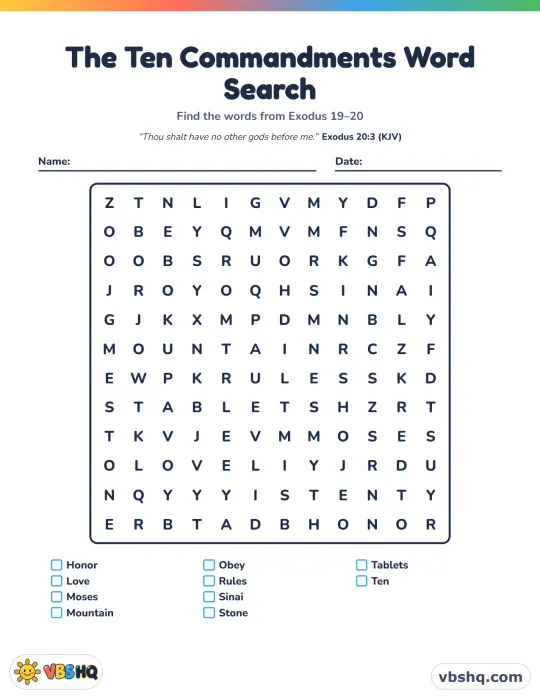
- The Ten CommandmentsBoy Jesus at the Temple
"Honour thy father and thy mother" is one of the Ten Commandments. The Bible verse is Exodus 20:12 (KJV): "Honour thy father and thy mother: that thy days may be long upon the land which the LORD thy God giveth thee." The King James Bible spells it honour. It means to treat your parents as important: to listen to them, obey them, speak kindly to them and love them. The free printable sheet below helps kids learn the verse and live it.
What it means for kids
God gave every child a mom and a dad, and most children have grown-ups who take care of them every day. Some live with both parents, some with one, and some with grandparents, foster parents or others. God tells children to honour the people He has given to care for them. Paul wrote it to children in Ephesians 6:1: "Children, obey your parents in the Lord: for this is right."
Honour shows up in small, everyday things:
- Obey the first time, without arguing (Colossians 3:20).
- Say "please" and "thank you."
- Tell the truth, even when it's hard.
- Help without being asked: set the table, pick up your things.
- Speak kindly, even when you're upset.
- Pray for them. Hannah prayed for her son (1 Samuel 1:27); you can pray for your parents.
The first commandment with promise
Ephesians 6:2–3 calls it "the first commandment with promise": "That it may be well with thee, and thou mayest live long on the earth." God gives a promise with this commandment, and Deuteronomy 5:16 says it again: "that it may go well with thee."
Jesus honoured His parents
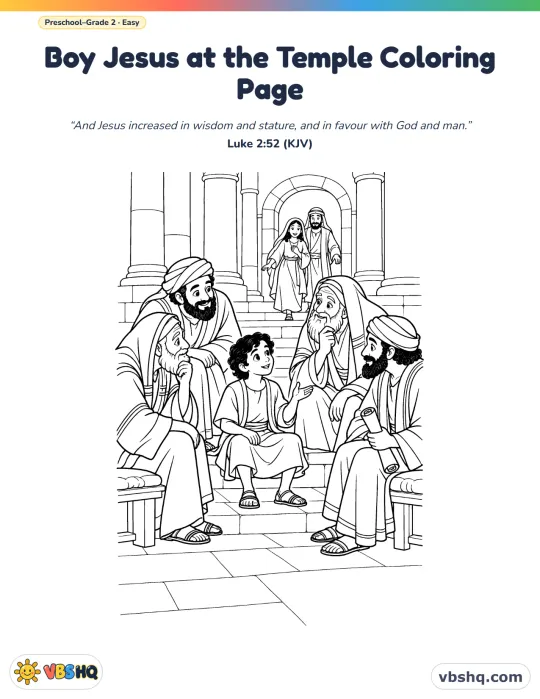
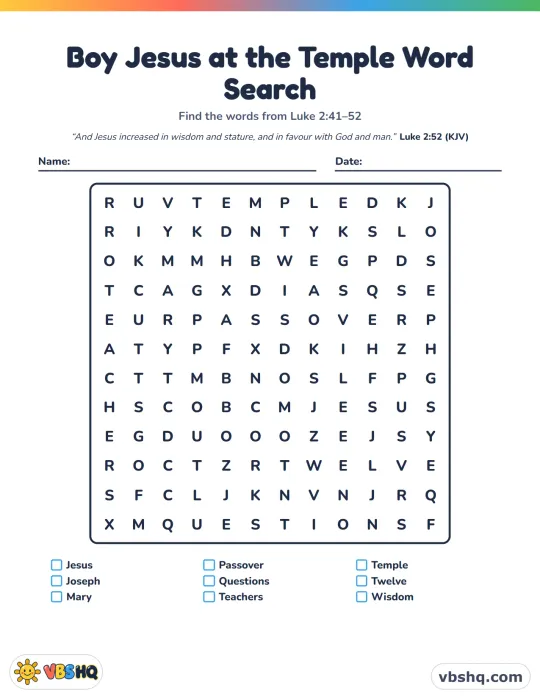
When Jesus was twelve, Mary and Joseph found Him in the temple. Then "he went down with them, and came to Nazareth, and was subject unto them" (Luke 2:51). Even at the cross, Jesus made sure His mother would be cared for: "Behold thy mother! And from that hour that disciple took her unto his own home." (John 19:27). Read the whole story in our Boy Jesus at the Temple story set (memory verse Luke 2:52).
The printable memory verse sheet
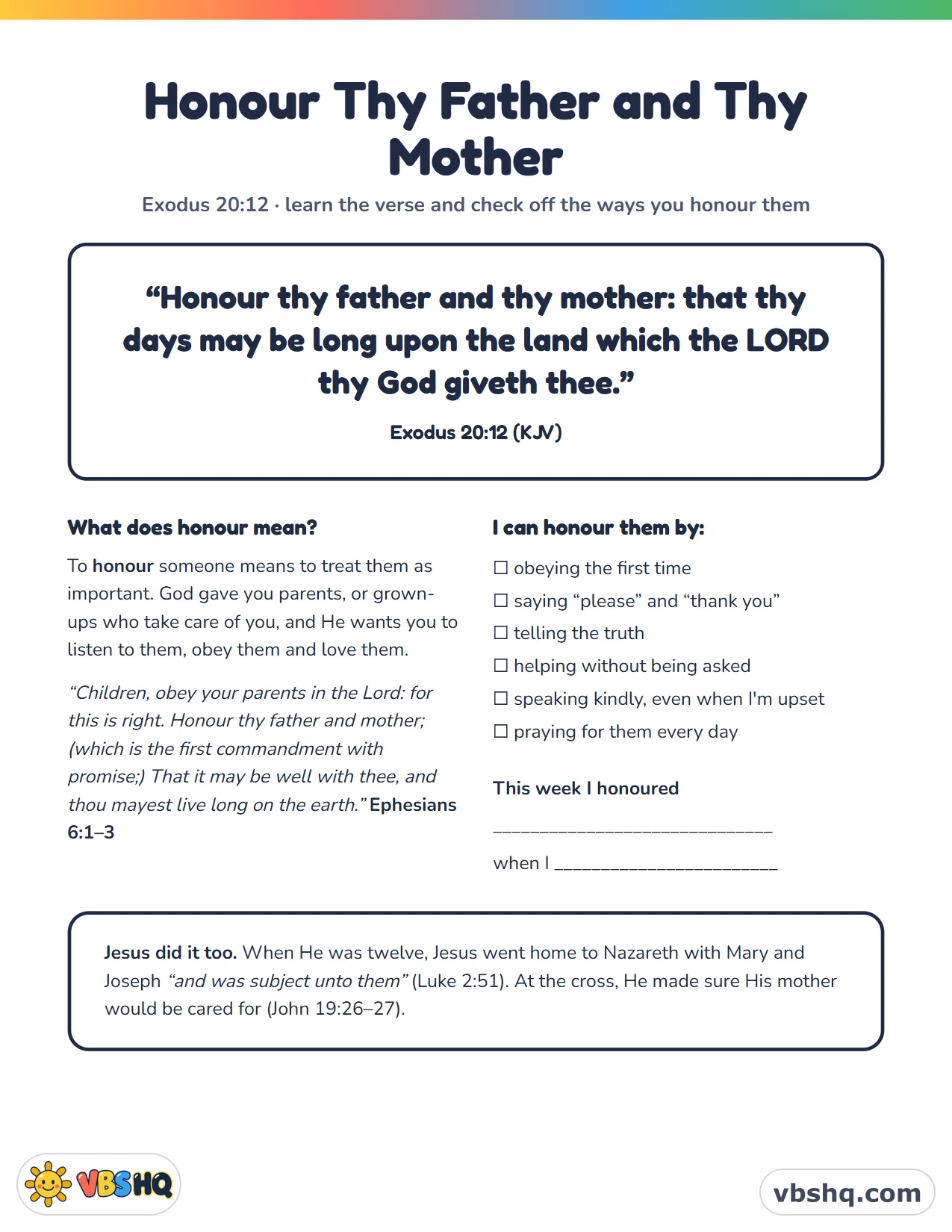
One page: Exodus 20:12 in big letters to learn, Ephesians 6:1–3, six ways to honour your parents to check off this week, and a line to finish: "This week I honoured ____ when I ____." Send it home before Mother's Day or Father's Day, or use it with our Ten Commandments story set.
For teachers: some children in your class don't live with their parents. Say "your parents, or the grown-ups God has given to take care of you" so every child can do this. If a child tells you something that worries you about home, follow your church's child-safety policy.
More for Mother's Day and Father's Day
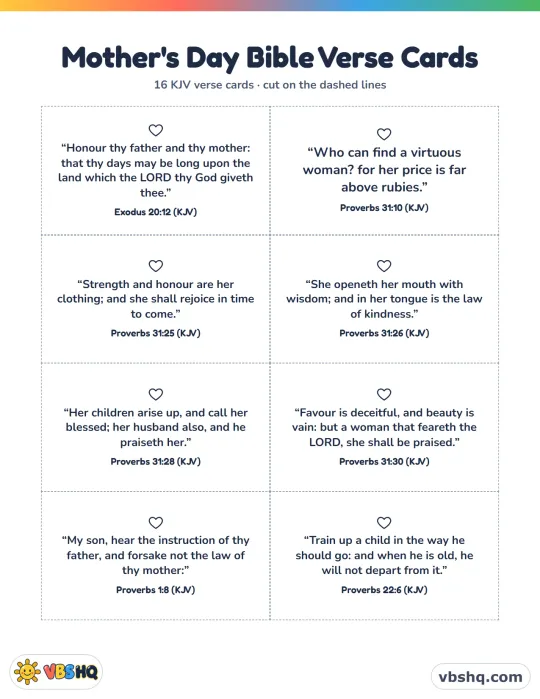
- Bible verses about mothers (16 KJV cards)
- Mother's Day prayer cards for kids
- Mother's Day poems for church, including a poem about this verse
- Father's Day resources
Frequently asked questions
Where is "honor your father and mother" in the Bible?
In the Ten Commandments, Exodus 20:12: "Honour thy father and thy mother: that thy days may be long upon the land which the LORD thy God giveth thee." It is repeated in Deuteronomy 5:16, by Jesus in Matthew 15:4, and by Paul in Ephesians 6:2.
What does it mean to honour your father and mother?
To treat them as important. For a child, that means listening and obeying, speaking kindly, telling the truth, helping at home and praying for them. Ephesians 6:1 says, "Children, obey your parents in the Lord: for this is right."
What is the promise in "honour thy father and mother"?
Ephesians 6:2–3 calls it "the first commandment with promise": "That it may be well with thee, and thou mayest live long on the earth."
What if a child doesn't live with their parents?
Teach it as "your parents, or the grown-ups God has given to take care of you." Grandparents, foster parents and other caregivers are honoured the same way.